
Automating Lead Follow-Up Without Losing the Personal Touch
Speed-to-lead wins jobs, but robotic sequences lose them. Build automation that responds fast and still sounds like your business.

The lead arrives at 9:47pm on a Tuesday. Your competitor sends an automated acknowledgement in ninety seconds and follows up at 8:15am with a personalised note referencing the job details. You see the form submission at 10:30am Wednesday, call at 2pm, and wonder why they booked someone else.
Speed-to-lead is not a marketing buzzword for service businesses, it is margin. Studies consistently show response time correlates with win rate, especially for time-sensitive jobs like moves, emergency repairs, and skip hire with tight deadlines. Automation is how small teams compete without hiring overnight sales staff.
But automation done badly feels robotic and damages trust. This guide shows how to automate lead follow-up for service businesses while keeping messages that sound like your brand, and how it connects to AI chatbots, reliable forms, and the systems you already run.
Why speed-to-lead wins service jobs
Service buyers often submit multiple enquiries in one session. The first business to respond credibly, not with a generic “we received your message” but with evidence they read the details, establishes preference. Delay signals disorganisation or indifference, even if your team is excellent on the job.
Automation solves the gap between submission and human availability. It does not replace the estimator who calls back; it ensures nobody waits hours in silence wondering if the form worked.
Practical response benchmarks
| Channel | Target during business hours | After hours |
|---|---|---|
| Automated acknowledgement | Under 2 minutes | Immediate |
| Human first contact | Under 60 minutes | First hour of next business day |
| Quote delivered | Same day for standard jobs | Clear SLA in auto-reply |
| Second touch if no reply | 24–48 hours | Not at 2am, schedule sensibly |
Quick win
Before buying complex CRM automation, fix instant email and SMS acknowledgement from your website forms. That alone recovers leads you are losing to silence.
Three layers of follow-up automation
Think in layers rather than one “automation switch.” Each layer has different tools and risk profiles.
Layer 1: Instant acknowledgement
Triggered on form submit. Confirms receipt, restates key details the customer entered, sets expectations (“We call within two hours”), and provides a direct phone number for urgent jobs. This layer is non-negotiable for every service business with web leads.
Layer 2: Nurture and reminder sequences
If no human reply or customer response within a defined window, send a second touch, additional questions, a link to FAQs, or a calendar link to book a call. Keep sequences short; three emails over a week beats ten over a month.
Layer 3: Internal routing and tasks
Notify the right person via Slack, SMS, or CRM task, not a shared inbox that nobody owns. Assign leads by service type, postcode, or job value. Escalate if untouched after 30 minutes during business hours.
Minimum automation stack
- Reliable form delivery (SMTP or transactional email provider)
- Instant customer acknowledgement with job summary
- Internal alert to assigned owner
- CRM or spreadsheet stage tracking
- One scheduled follow-up if status unchanged
What to automate (and what not to)
Automate repetitive, time-sensitive, low-judgement steps. Keep humans on pricing, scope disputes, complaints, and anything that could create contractual obligation.
Safe to automate
- Submission confirmations and detail recap
- Appointment reminders and “still interested?” nudges
- Request for missing information (photos, inventory, access notes)
- Review requests after completed jobs
- Internal SLA alerts when leads sit unassigned
Keep human
- Final quotes with liability implications
- Negotiation and discount decisions
- Complaints and damage claims
- Complex scheduling with multiple stakeholders
- Anything the customer explicitly asked to discuss by phone
Chatbots can handle first-touch FAQ deflection, see the AI chatbots guide, but should hand off to the same follow-up pipeline as forms, not a separate black hole.
Message templates that still sound human
Robotic automation uses placeholders badly: “Dear {{name}}, we received your enquiry.” Human-sounding automation references specifics and reads like someone on your team wrote it quickly, because someone did, once, in a template you refined.
Structure that works
- Acknowledge the specific job type (“Thanks for your man-and-van request from Hackney to Islington”).
- Confirm what happens next and when.
- Offer one easy action (reply with photos, call this number, complete missing fields).
- Sign with a real name or team name, not “The Admin Team.”
Example tone for a moving lead:
“Hi Sarah, got your quote request for a 2-bed move on 14 March, including stair access at both addresses. James will call before 11am to confirm van size and give you a firm price. If anything’s urgent, ring us on 020…”
That level of specificity requires structured form data, another reason generic contact forms underperform, as covered in why contact forms fail service businesses.
Tone trap
Over-automation flags: excessive exclamation marks, fake “I am personally reviewing your file right now” at 3am, and emails that ignore fields the customer already filled in. If your automation repeats questions from the form, trust drops instantly.
From WordPress form to CRM pipeline
Most service businesses run WordPress for marketing and local SEO. Leads originate in Contact Form 7, Gravity Forms, WPForms, or custom quote wizards. The break in the chain is usually integration, submissions sit in email while CRM stays empty.
Integration patterns
| Approach | Pros | Cons |
|---|---|---|
| Form plugin + Zapier/Make | Fast to wire, many CRM targets | Ongoing cost, failure points opaque |
| Native CRM form embed | Single system of record | May lack job-specific fields |
| Custom webhook to CRM API | Full control, structured data | Requires developer setup |
| Email parsing into CRM | Works with legacy setups | Fragile when email format changes |
For booking-heavy sites, skip bins, moves, trades with deposits, push structured wizard data, not flattened email text. Fields like waste type, van size, and access constraints should map to CRM custom properties for personalised follow-up.
Forms must work first
Automation amplifies whatever your forms already do. If submissions fail silently after a plugin update, you automate nothing, you just fail confidently. Read broken WordPress forms: why leads vanish silently and test submissions monthly as part of your maintenance plan.
SMS and voice as follow-up channels
Email open rates vary; SMS often cuts through for time-sensitive jobs if customers opted in. A concise text, “Received your skip bin request for 4021, confirming delivery window by 4pm today”, beats a three-paragraph email nobody reads. Respect quiet hours and local regulations on marketing texts versus transactional messages.
Voicemail drops and auto-diallers are higher risk for brand trust in residential services. Use sparingly and only where customers explicitly requested a call. For most operators, SMS plus email acknowledgement is sufficient.
CRM stages that match how you sell
Automation needs pipeline stages your team actually updates: New → Contacted → Quoted → Won/Lost → Nurture. If stages exist only on paper, sequences misfire, sending “still interested?” to customers who already booked. Weekly pipeline hygiene is non-negotiable; automation magnifies stale CRM data.
| Stage | Automated action | Human action |
|---|---|---|
| New lead | Instant ack + internal alert | Call within SLA |
| Contacted, no quote yet | Reminder to assign owner | Send quote |
| Quoted, no response | One follow-up at 48h | Personal call before discounting |
| Won | Booking confirmation + prep checklist | Operations scheduling |
| Lost | Optional nurture in 90 days | Log reason for loss |
Why automated follow-up fails silently
Common failure modes I see in audits:
- SMTP misconfiguration, customer acknowledgement never sends; team inbox might still work, or neither does.
- Spam filtering, automated emails land in promotions or junk; customer assumes you ignored them.
- Duplicate sequences, form plugin and CRM both send “thanks,” minutes apart.
- No ownership, alerts go to info@; nobody is on the hook.
- Wrong timezone scheduling, follow-up emails fire at 2am local time.
- Stale templates, old phone numbers, discontinued services, wrong response times.
If you suspect systemic issues across forms, hosting, and integrations, working through business technology audit questions surfaces gaps before you invest in heavier automation.
Test like a customer
Submit a test lead monthly from an external email address. Trace every automated touch, customer and internal, until the thread is closed. Log failures in the same place you track jobs.
Metrics that prove automation works
Measure revenue-linked outcomes, not email open rates alone:
- Time to first human response, median minutes from submit to call or personalised email.
- Lead contact rate, percentage reached within 24 hours.
- Quote-to-win ratio, before and after automation improvements.
- Stale lead count, open leads with no activity after 48 hours.
- Customer complaint rate on communication, spikes mean templates need fixing.
Segment by source: Google Ads leads may need faster SMS than organic SEO leads. One sequence rarely fits all.
Compliance and consent
Automated email and SMS must comply with spam and privacy rules in your jurisdiction, consent for marketing versus transactional messages, unsubscribe links where required, and accurate sender identification. Store consent timestamps if you add leads to newsletter sequences after a quote request.
Document what data automation stores and how long. Customers occasionally ask what you hold; chaotic Zapier histories make that hard to answer. Simplicity in integrations reduces compliance surface area.
Seasonal and capacity adjustments
Moving peak season may require shorter SLAs in auto-replies, or honest longer ones if you cannot hit two-hour callbacks. Update templates when capacity changes. Promising “same-day quote” in automation while the team is two days behind creates worse damage than conservative SLAs.
Scaling without sounding like robots
As volume grows, personalisation comes from data, not from pretending every email is handwritten. Use merge fields for suburbs, service types, and preferred dates. Train staff to add one custom sentence when they take over from automation, that hybrid touch outperforms fully manual or fully generic.
Conclusion
Automating lead follow-up is how service businesses respond at the speed customers expect without burning out the owner. Start with instant, specific acknowledgements and reliable internal routing. Add short nurture sequences only where leads genuinely go cold. Keep humans on quotes, complaints, and complex scope.
Fix broken forms before fancy CRM workflows. Align chat, wizards, and contact paths to one pipeline. Measure response time and win rate, not just automation volume.
Done well, automation feels like attentiveness. Done poorly, it confirms the customer was right to call your competitor. The difference is specificity, timing, and someone owning the system week to week.
Choosing automation tools without overbuying
Small teams often need only form notifications, a transactional email provider, and CRM tasks, not enterprise marketing automation. Start minimal: Fix delivery, add acknowledgement, assign ownership. Layer Zapier or native CRM sequences when volume justifies complexity.
Evaluate tools on whether they read structured wizard fields, not just email body text. Moving and skip hire leads lose value when automation cannot reference suburb, date, or service type in the first reply.
Revisit templates when services or prices change. An automation stack with outdated copy is worse than none, it confidently misleads at scale.
Start this week: pick one form, submit a test lead, and time how long until a human would realistically respond. That gap, measured honestly, is your automation brief. Close it before you buy another tool.
Frequently asked questions
- How fast should I respond to a new website lead?
- Within minutes during business hours is ideal. Automated acknowledgement plus human follow-up within an hour beats perfect copy sent next day.
Need help with this?
Let's review your setup
I help service businesses fix WordPress, bookings, security, and performance, with systems that support revenue, not just launches.
Related articles
 AI
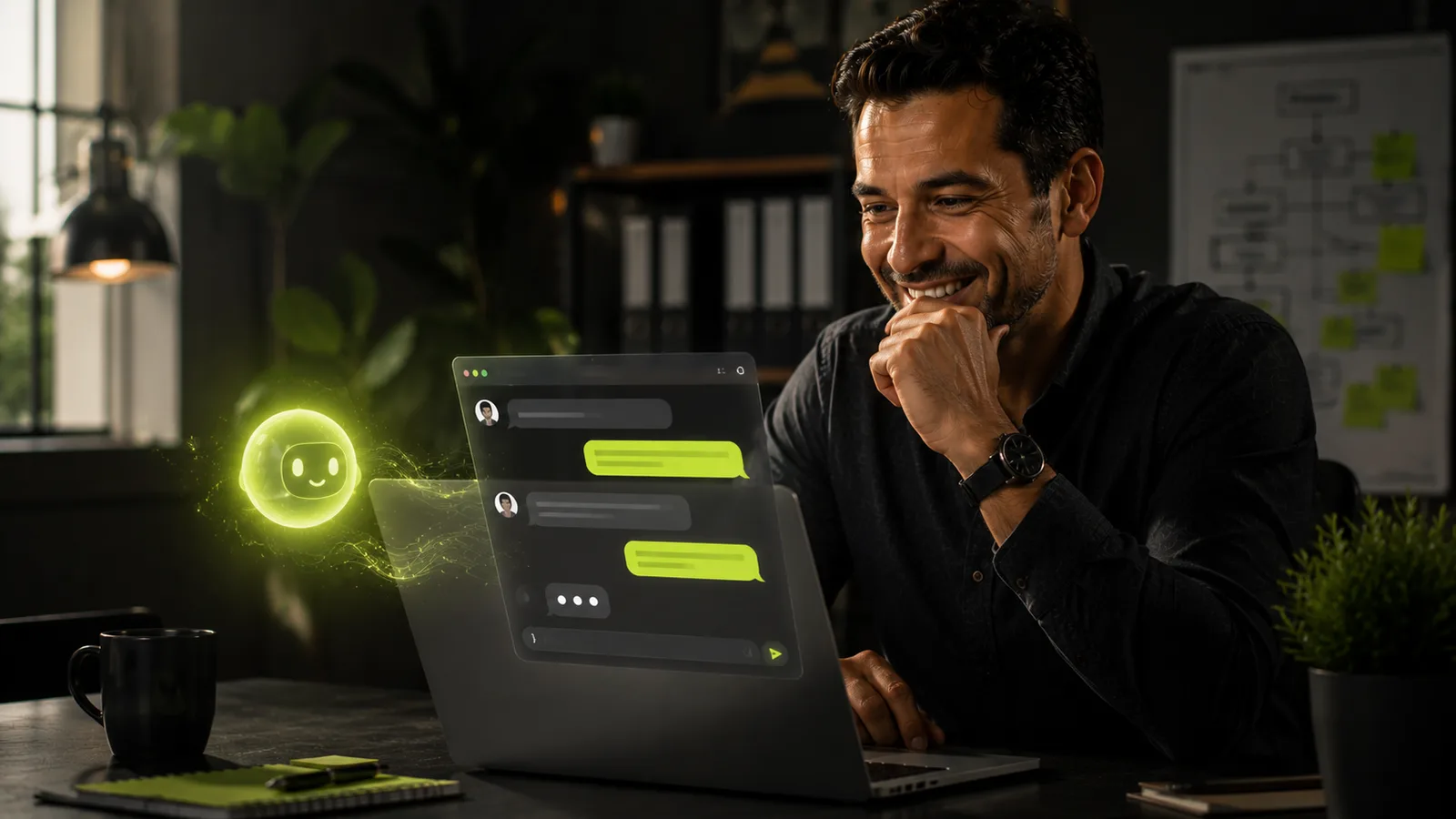
AIAI Chatbots for Service Businesses: When They Help (And When They Don't)
Chatbots can deflect repetitive questions or damage trust with wrong answers. Here is how to deploy AI on a service site without the hype.
Read article Conversion
Broken WordPress Forms: Why Leads Vanish Silently
The form says thank you. Your inbox stays empty. Silent form failure is one of the most expensive bugs on service websites, and the easiest to miss.
Read article Strategy
Business Technology Audit: 15 Questions Before Your Next Website Project
Before you redesign or rebuild, answer these questions. They surface hidden risk, wasted spend, and the projects that actually move revenue.
Read articleReady to talk?
Book a strategy session or send a message. I'll respond with a clear next step.